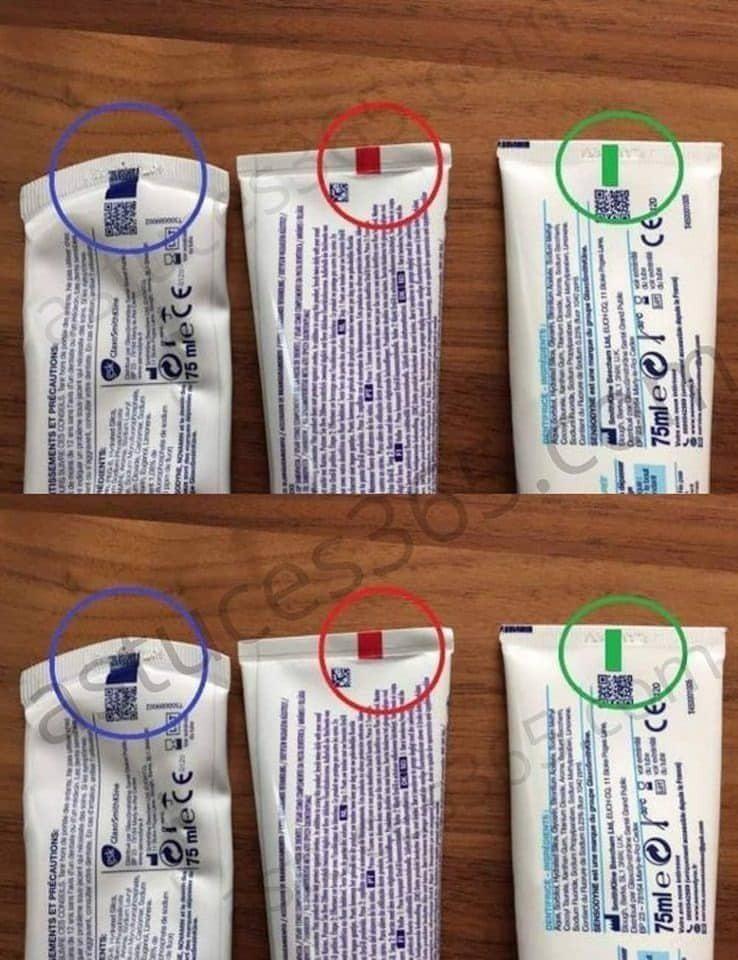
In other words:
They have nothing to do with the ingredients in toothpaste.
Why the myth spread
The idea stuck with me because it seems logical.
People want quick ways to identify natural or safe products, and a simple color code seems like an easy shortcut. But in reality, toothpaste formulas are much more complex and can’t be summarized by a single color code.
How to really choose the right toothpaste
Instead of relying on the color of the tube, here’s what really matters:
Check the ingredients
Look at the label on the back. It tells you exactly what’s inside.
Look for fluoride
Fluoride is one of the most effective ingredients for preventing tooth decay and strengthening enamel.
Consider your needs
The different formulas serve different purposes:
Relief from sensitivity
Whitening
Gum care
Natural or low-chemical options
Ask your dentist
If you have any doubts, a dentist can advise you on the best option based on your oral health.
A quick tip
If you prefer more natural products, look for labels like:
“Fluoride-free” (if that’s your preference)
“SLS-free” (without aggressive foaming agents)
“Natural” or “organic” (but check the ingredients list anyway)
In conclusion
Those colored stripes on toothpaste tubes might seem significant, but they’re actually just part of the packaging process.
They don’t indicate whether a toothpaste is natural, chemical-free, or better for your health.
If you want to make the best choice for your smile, forget about color myths and focus on what really matters: the ingredients and your personal dental needs.