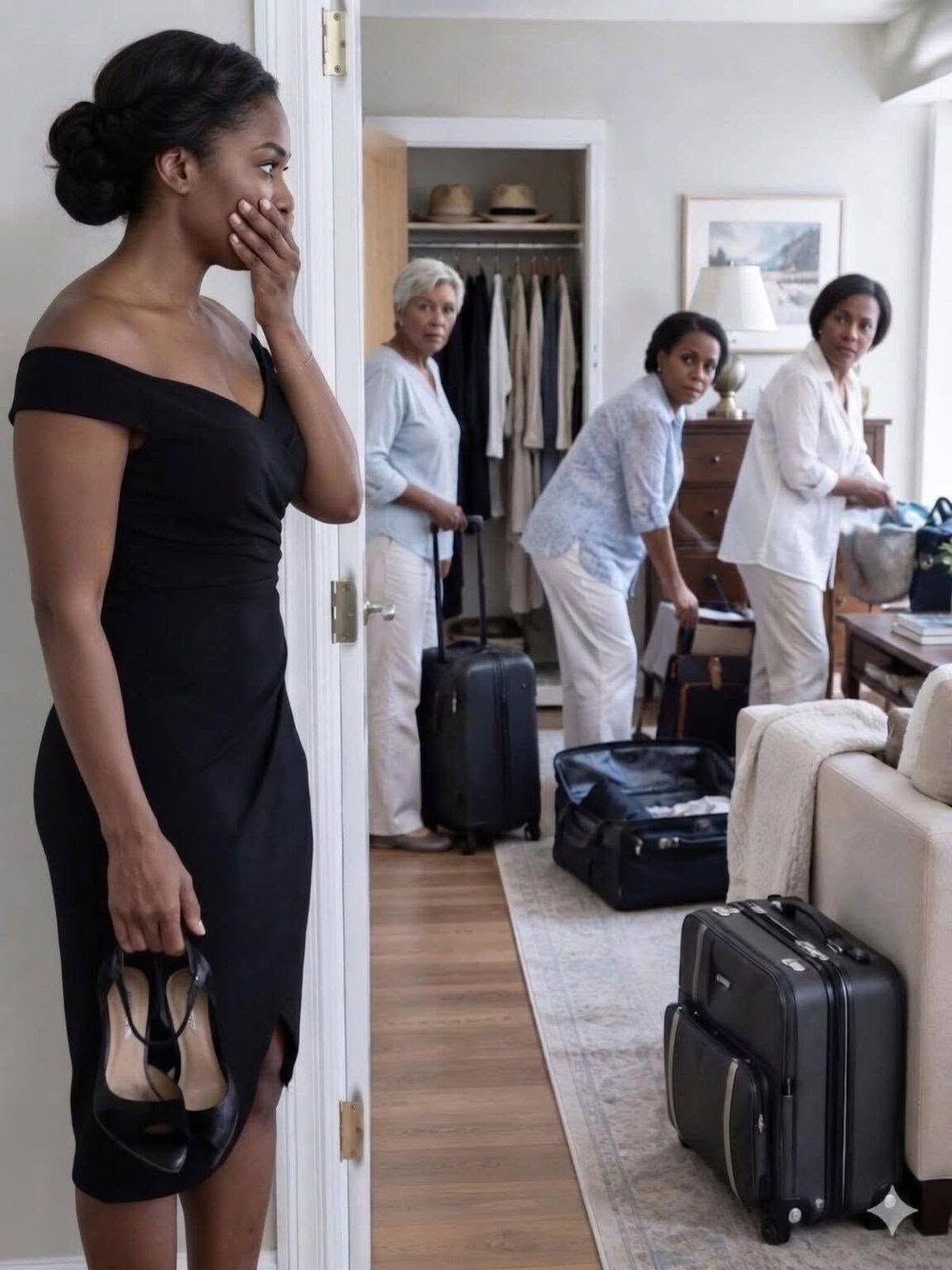
ftAer my husband’s funeral, I came back home with my black dress still heavy against my skin. The moment I unlocked the door, I found my mother-in-law and eight relatives stuffing belongings into suitcases as if they were checking out of a vacation rental. “This house belongs to us now. Everything Simon owned belongs to us too. You need to leave,” they announced without the slightest attempt to lower their voices. I stood there frozen for a moment… and then I laughed. I laughed so hard the entire room fell silent. Because if they truly believed Simon had “left nothing behind,” it only proved they never understood who he really was… or what documents he signed before he d/ie/d.
By the time I reached the third-floor apartment in South Carolina, my feet felt blistered and my mind was completely drained. The hallway still carried the fading scent of funeral lilies. I remember holding my heels in one hand and my keys in the other, hoping for nothing more than a few minutes of peace.
Instead, I walked into chaos.
The second I opened the door, I saw Dorothy standing in my dining room directing people around like a hotel manager organizing arrivals. Closet doors hung open. Simon’s shirts were pulled halfway from their hangers. Suitcases crowded the hallway. Across the dining table lay envelopes, spare keys, and a handwritten inventory in Dorothy’s sharp handwriting: clothing, electronics, paperwork.
“This house belongs to us now,” she said, completely unsurprised by my arrival. “Everything Simon owned comes with it. You need to move out.”
Knox, one of Simon’s cousins, pulled a zipper shut on a suitcase and offered me the kind of smile people wear when they convince themselves cruelty is practical.
“Don’t make this more complicated than it needs to be, Vera.”
I looked beyond them toward the entry table where Simon’s urn still rested beside the funeral flowers.
They had walked around it.
Reached over it.
Treated my grief like another piece of furniture in the room.
“Who gave you permission to come in here?” I asked.
Dorothy raised a brass key.
“I’m his mother. I’ve always had a copy.”
An aunt named Kaylin had already opened Simon’s desk drawer and was sorting through documents. I told her to stop touching it.
She turned toward me with open disdain.
“And what authority do you have now?” she asked. “You’re just a widow.”
That was when I started laughing.
Not because any part of the situation was amusing.
Six nights earlier, in a hospital room carrying the scent of antiseptic and rain, Simon had squeezed my hand and whispered, If they show up before the flowers d:ie, laugh first. Melanie will take care of the rest.
So I laughed until every person in the room stopped moving.
Dorothy’s smile disappeared.
“Have you completely lost your mind?”
“No,” I replied, brushing beneath one eye. “You’ve all repeated the same mistake you made with Simon for his entire life. You assumed that because he lived quietly, he had nothing. Because he never bragged, you thought he lacked influence. Because you never truly understood him, you convinced yourselves there was no plan.”
Knox straightened.
“There’s no will. We already checked.”
“Of course you checked,” I replied. “And naturally, you didn’t find one.”
My phone buzzed in my hand.
Part 2: The Documents on the Desk