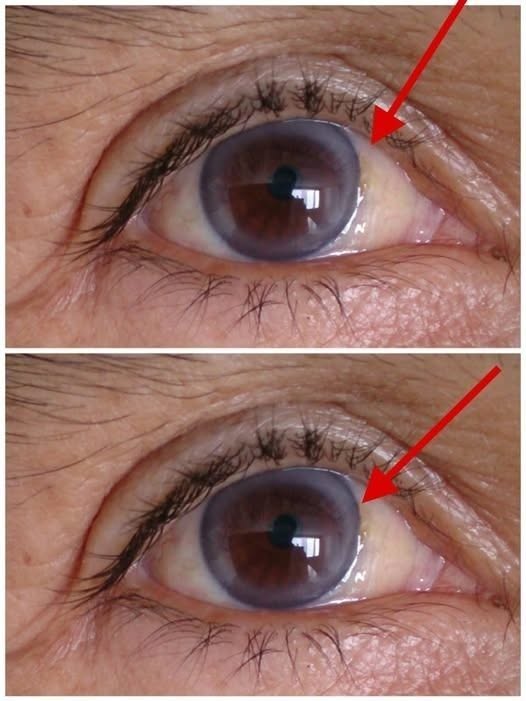
In younger individuals, the answer may be yes.
Research suggests that an early appearance of a corneal ring can sometimes be associated with:
- Elevated LDL (“bad”) cholesterol
- High triglycerides
- Genetic lipid disorders
- Increased cardiovascular risk
This does not mean everyone with Arcus Senilis has heart disease, but it may be a reason to discuss cholesterol testing with a healthcare professional.
Does It Affect Vision?
Fortunately, Arcus Senilis usually does not interfere with vision.
The deposits remain at the edge of the cornea and do not block light from entering the eye.
Most people experience:
- No pain
- No redness
- No vision changes
- No discomfort
For this reason, the condition often goes unnoticed for years.
How Is It Diagnosed?
An eye doctor can usually diagnose Arcus Senilis during a routine eye examination.
Using a slit lamp microscope, they can clearly see the characteristic ring around the cornea.
Additional tests may be recommended if:
- The person is relatively young
- There is a family history of high cholesterol
- Other cardiovascular risk factors are present