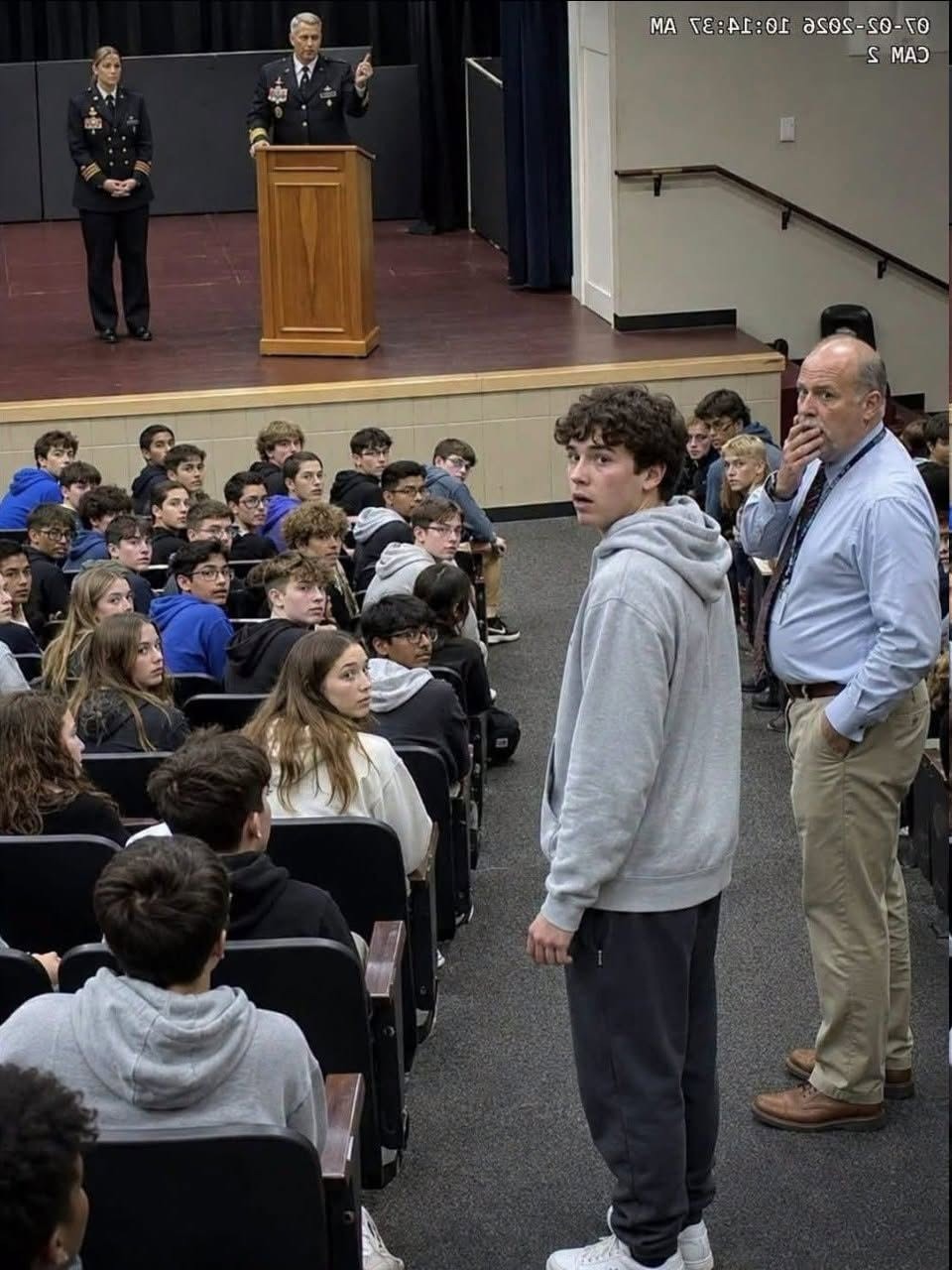
Even in a school where most students divided the world into things that directly affected them and things that didn't, the name Admiral Carter held a strong pull. He was in the news—not in the constant, frenetic way of celebrities, but as someone whose actions had far-reaching consequences, who made decisions in rooms where those decisions mattered, and whose name appeared in phrases that also contained words like command, operations, and distinction.
He was tall, as some people are—not just physically, but in terms of the space they occupy in a room, the quality of presence you feel even before they speak. Gray hair. The posture of someone who has worn a uniform for decades, whose body has so completely embodied its demands that the posture persists even in civilian clothes. He sat on the stage during Director Harris's welcoming speech with the quiet attention of someone who is always listening.
I was in the freshman section, in the middle of the row. I chose the center on purpose because middle seats don't attract attention from either the front or the back, a calculation I make automatically in large groups.
Director Harris spoke about courage and community, and about the importance of recognizing those who serve.
I was looking at my notebook.
Admiral Carter was watching the program.