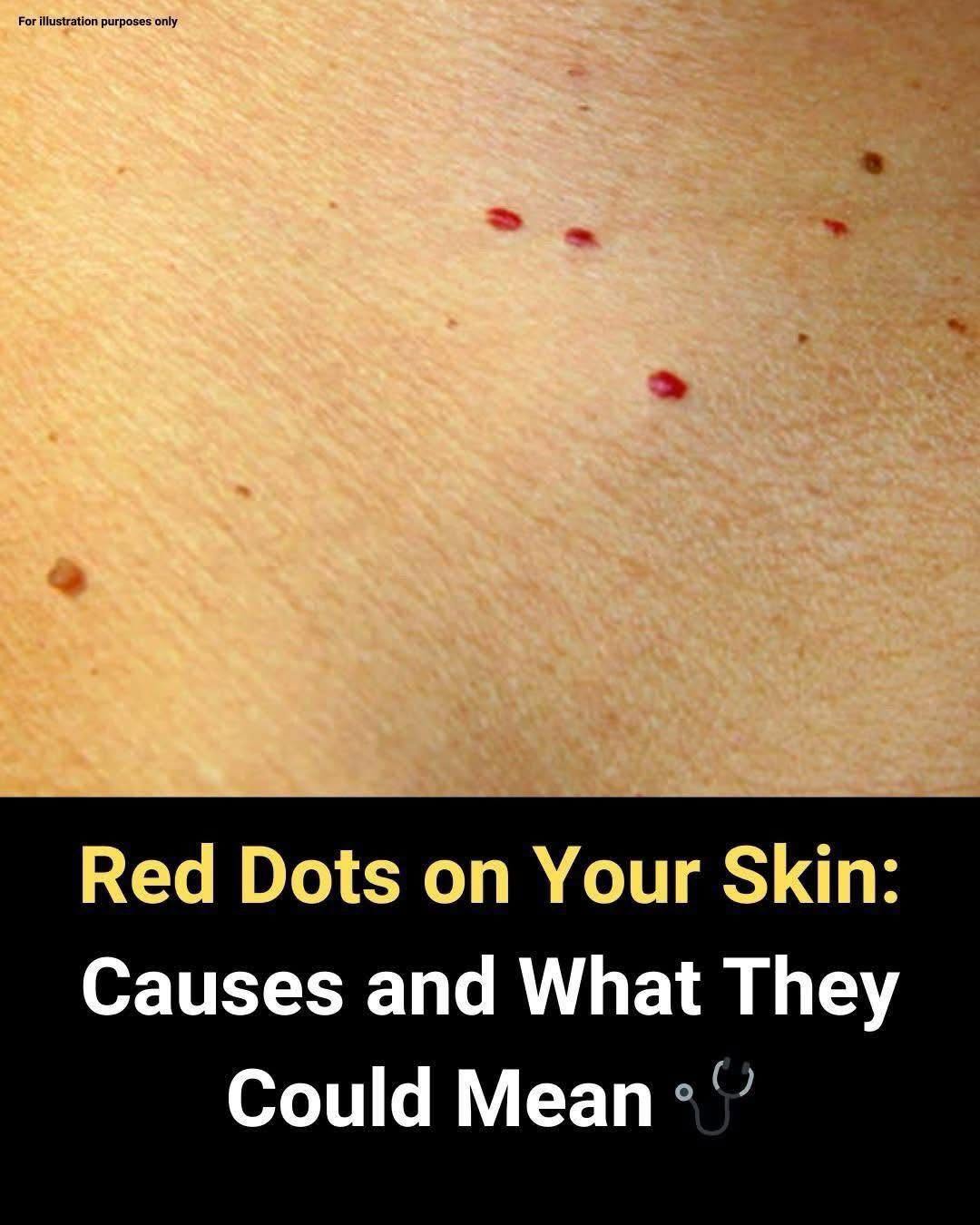
Heat rash is common among children but can affect adults as well.
Keeping the skin cool and dry often helps the rash improve.
Several chronic skin conditions can also produce areas of redness.
Eczema frequently causes dry, itchy patches that become inflamed.
Psoriasis often appears as thick, scaly plaques with well-defined edges.
Rosacea mainly affects the face, causing redness and sometimes small visible blood vessels.
Each of these conditions has its own pattern and may require different approaches to treatment.
Sometimes red spots may signal an infection.
Bacterial skin infections such as cellulitis usually begin with redness, swelling, warmth, tenderness, and skin that feels hot to the touch. Unlike isolated red dots, cellulitis often spreads over time and is usually accompanied by increasing discomfort.
Because bacterial infections can worsen rapidly, prompt medical evaluation is important if these symptoms develop.
Viral illnesses can also produce skin rashes.
Depending on the virus involved, the rash may appear as tiny red spots, larger patches, or raised bumps accompanied by fever, sore throat, fatigue, or other symptoms.
This is one reason healthcare providers often consider the whole person—not just the appearance of the skin—when making a diagnosis.
There are several situations where you should not simply wait to see if red spots disappear on their own.